April 1 ends, and with it disappear the pranks and fake alerts that make us question everything on April Fools' Day.
But scammers? They don't take a day off.
Spring marks a peak time for cybercriminals. It's not due to careless teams, but because everyone's juggling multiple tasks, distracted, and rushing through the day. That's when deceptive scams sneak past even the most vigilant.
Here are three current scams targeting savvy, diligent employees just aiming to get their work done.
As you review these, ask yourself: Would my team stop and recognize each threat before acting?
Scam #1: Fake Toll or Parking Fee Alerts via Text
Imagine an employee receiving a text:
"Unpaid toll balance: $6.99. Pay within 12 hours to avoid penalties."
The message references real toll services like E-ZPass, SunPass, or FasTrak, depending on the location. The small fee seems harmless enough to ignore, so amid meetings, they click, pay, and move on.
But the link is bogus.
In 2024, the FBI reported over 60,000 complaints about fraudulent toll texts, with a staggering 900% spike in 2025. Researchers uncovered more than 60,000 fake websites mimicking state toll authorities — a clear sign how lucrative this scam has become. Shockingly, some targets live in states without any toll roads.
Why it succeeds: $6 seems insignificant, and many have recently passed a toll or parked downtown, making the message believable.
Protection tip: Real toll agencies never demand payment via text links. Encourage your team to pay only through official apps or websites and avoid replying — even "STOP" replies can verify active numbers and invite more scams.
Convenience lures victims; strict payment procedures defend against fraud.
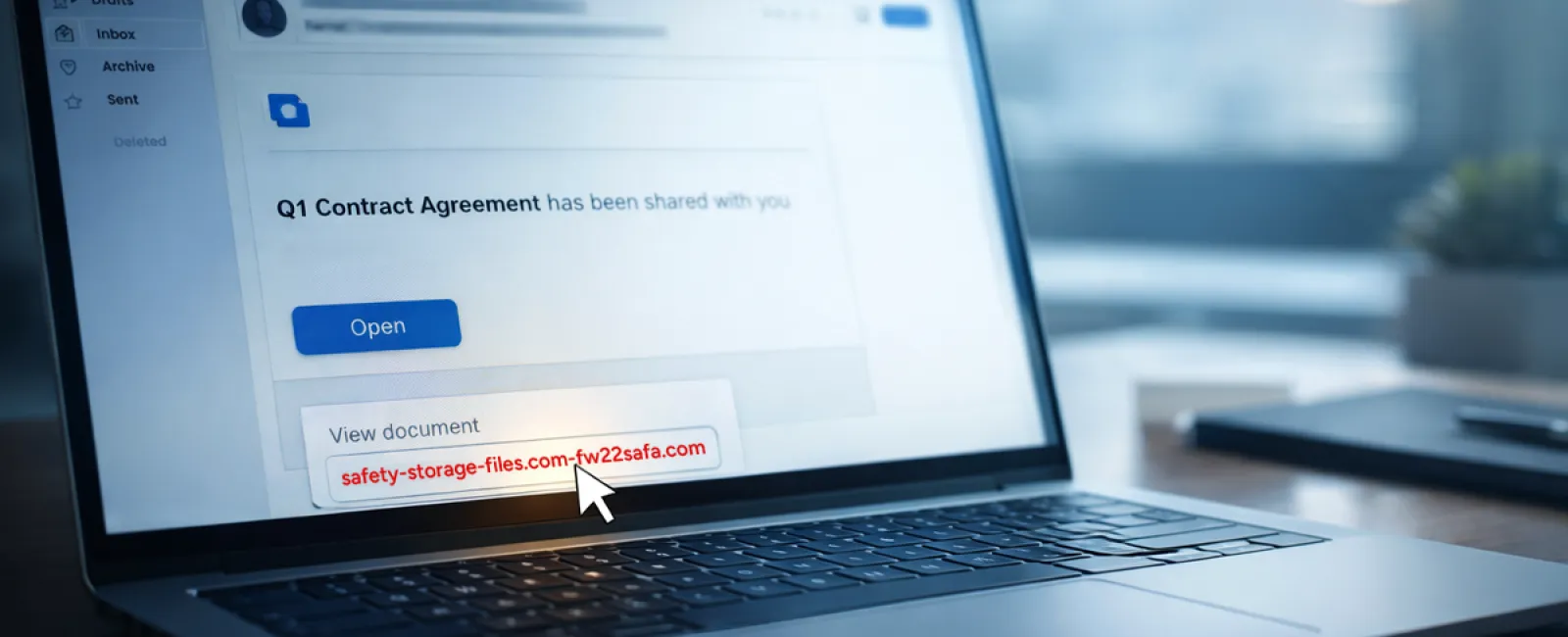
Scam #2: "Your File Is Ready" Phishing Emails
This scam blends seamlessly into daily work routines.
An employee receives an email notifying them a document, like a contract via DocuSign, spreadsheet on OneDrive, or file in Google Drive, has been shared.
The sender appears legitimate, the design mirrors real notifications.
They click the link, prompted to log in, and enter work credentials.
Suddenly, hackers gain access to your company's cloud environment.
Phishing through trusted platforms exploded in 2025 — KnowBe4's Threat Labs report a 67% surge in abuse of Google Drive, DocuSign, Microsoft, and Salesforce. Google Slides phishing links alone jumped over 200% in six months.
Even worse, employees are seven times likelier to click malicious links from OneDrive or SharePoint than unknown emails because the message looks authentic.
Advanced attackers create files in compromised accounts, then send real platform notifications, bypassing spam filters since these emails come directly from Google or Microsoft servers.
Defense strategy: If unanticipated, employees should avoid clicking links in emails, instead logging directly into the platform to verify new files. Restrict external sharing permissions and enable alerts for unusual logins—simple IT measures that take minutes to set up.
Consistent caution wins the day.
Scam #3: Highly Sophisticated Phishing Emails
Gone are the days when phishing emails were riddled with errors and easy to spot.
A 2025 study shows AI-generated phishing emails achieve a 54% click rate versus only 12% for human-crafted ones — over four times more effective. They mimic real companies, job titles, and procedures effortlessly, scraping information from LinkedIn and company websites.
These scams target departments specifically: HR and payroll receive fake employee verification requests, finance handles spoofed vendor payment changes. One test found 72% of employees engaged with vendor impersonation emails — 90% above other phishing types. The messages appear calm, urgent, and professional — just an ordinary Tuesday inbox.
Preventive measures: Verify any request involving credentials, payments, or sensitive data through a secondary method such as phone call, chat, or face-to-face confirmation. Always hover over sender addresses to verify domains, and treat urgent requests with caution — urgency is often a red flag.
Effective security doesn't rely on panic but on thoughtful verification.
The Core Issue
All these scams depend on trust, authority, timing, and the mindset of "this will only take a moment."
The real threat isn't careless employees; it's expecting everyone to consistently slow down and make flawless decisions under pressure.
If one rushed click can disrupt your day, that points to a process flaw—not a people problem.
Fortunately, process issues are fixable.
How We Support You
Most business owners don't want an added project or to become cybersecurity trainers.
They simply want confidence that their business is secure from hidden threats.
If you're worried about your team's exposure—or know someone who should be—let's talk.
Book a straightforward discovery call to discuss:
• Current risks businesses like yours face
• How vulnerabilities arise during routine tasks
• Practical steps to reduce risk without slowing productivity
No pressure. No scare tactics. Just clear insights and solutions.
Click here or give us a call at 888-638-3621 to schedule your free 15-Minute Discovery Call.
Not for you? Feel free to share this with someone who needs the warning. Sometimes, awareness turns a "would have clicked" into a "nice try."