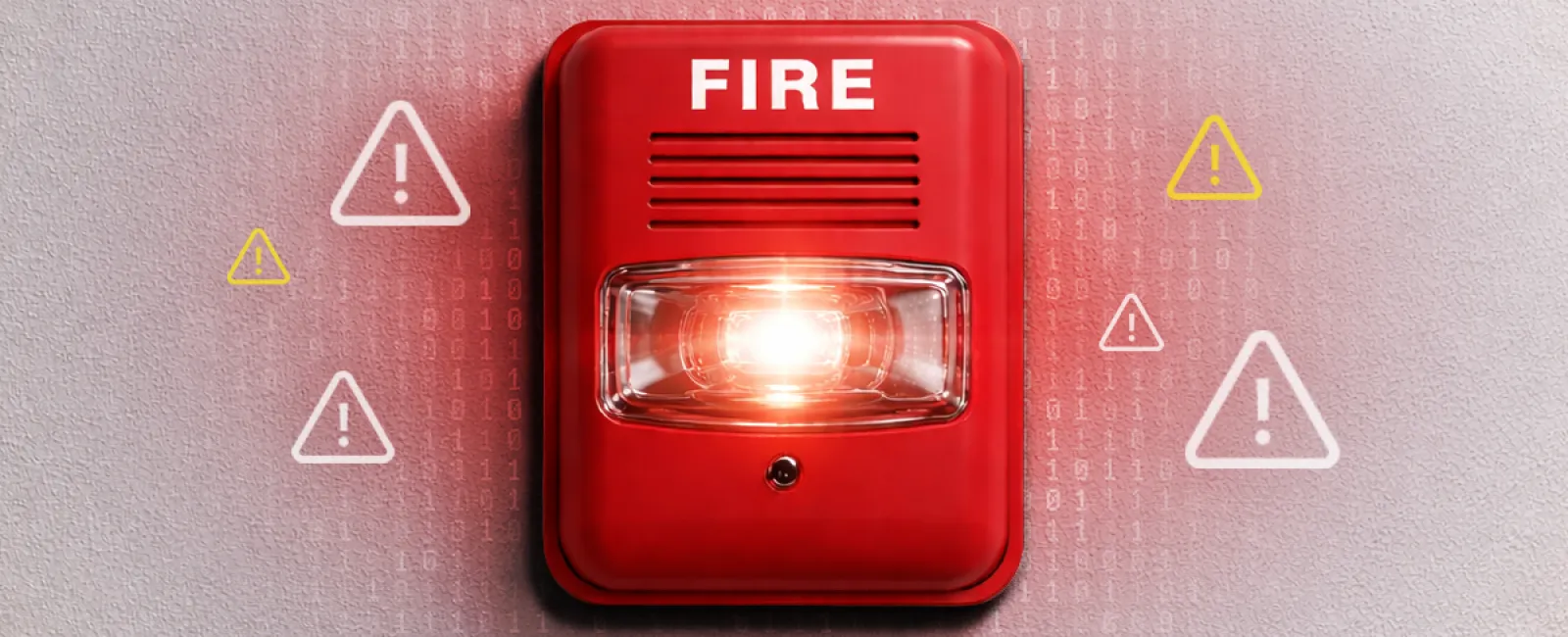
Waiting to address IT issues until they become obvious can feel harmless at first.
Most problems begin quietly: a device runs a little slower, an alert appears, or something seems off even though everything still works. Since the issue isn't urgent yet, it gets placed on the back burner while other priorities take over.
Operations keep moving. Nothing seems critical.
But small issues rarely stay small, and when they finally surface, they often arrive all at once.
That's how an ordinary workday turns into an all-hands emergency. During the summer, those disruptions become even more difficult to manage.
With key staff out of office and schedules shifting, even basic IT problems take longer to identify and resolve, affecting more people along the way. What should have been handled quietly becomes a business-wide interruption.
Here are a few of the most common ones we see:
1. The "it's just a little slow" system
It often begins with a system that is only slightly slower than expected.
Because nothing fully breaks, no one flags it. Users adapt by waiting longer, refreshing pages, or trying again. Before long, the slowdown becomes part of the normal workflow.
Then one day, it fails completely.
At that point, your team can't access the tools they rely on, and productivity starts to drop fast. People begin troubleshooting on their own, rebooting devices, guessing at the cause, or searching for short-term fixes.
If the usual support person isn't available, diagnosis takes even longer.
What could have been a quick repair when the slowdown first appeared now becomes downtime that slows everyone down.
2. The update that keeps getting postponed
There is always an update that needs attention.
But it never feels like the right moment. Deadlines are looming, projects are underway, or something else feels more urgent. The update gets delayed to next week, then delayed again.
Since everything appears to be running normally, it doesn't seem risky.
Eventually, something changes. A system becomes incompatible, a known issue gets worse, or an unresolved vulnerability stays open long enough to create real risk.
Now a critical platform may not function properly, or it may stop working altogether.
Instead of a planned maintenance window, your team is dealing with an unplanned interruption. In the summer, when fewer people are available, that disruption lasts longer and has a larger effect on the business.
3. The untested backup
Backups usually run quietly in the background, which makes them easy to overlook.
Maybe there was a warning at some point, or a message that didn't seem important enough to act on. Since nothing failed right away, it was easy to assume everything was fine.
That assumption only holds until something actually goes wrong.
When a file is deleted, a system goes down, or data needs to be recovered, the backup suddenly becomes essential. At that moment, you find out whether it is truly ready or not.
If it has not been running correctly, is incomplete, or has never been tested, recovery takes longer and becomes more complicated than expected.
What should have been a fast restore turns into a bigger disruption, with your team waiting to get back to work.
How proactive IT prevents this
The difference is not luck; it's strategy.
Rather than waiting for a breakdown, proactive IT looks for warning signs early and resolves problems before they impact your team.
That means performance concerns are corrected before they become outages, updates are managed on a consistent schedule instead of being delayed, and backups are monitored and tested so they are ready when needed.
It won't prevent every issue, but it keeps minor problems from turning into major interruptions that throw your whole team off course.
What to do before the next issue becomes urgent
If you already have a few IT concerns sitting in the background, you're not alone.
The challenge is that these issues often surface at the worst possible time, especially when your team is already stretched thin.
That's where we step in.
As your IT partner, we help stop small issues from becoming bigger problems by:
- Monitoring your systems so issues are caught early
- Managing updates and maintenance so nothing gets delayed indefinitely
- Making sure your backups are ready when you need them
- Providing your team with a fast, simple way to get help when something is off
Instead of crossing your fingers and hoping everything holds together, you know the work is handled.
Let's review what's been sitting on your list—and make sure it doesn't become your next fire drill.
Click here or give us a call at 888-638-3621 to schedule your free 15-Minute Discovery Call.
If this sounds like a situation someone you know is facing, send it their way. They may be closer to a fire drill than they realize.